
Browse products by
Filter By Type
Filter By Finish
Filter By Look
Filter By Application


Filter By Type
Filter By Look
Filter By Application
Filter By Size
Blog
Architectural Surfaces: Redefining Modern Design with Lavish Ceramics
Feb 2026

In the study of architecture, attention is often directed towards structure, form, and spatial planning. However, an equally significant aspect of the built environment is the treatment of its surfaces.
Architectural Surfaces include floors, walls, and other visible planes that define the boundaries of space. These surfaces influence not only the appearance of a structure but also its functional performance and experiential quality.In recent decades, rapid developments in material technology have expanded the possibilities available to architects and designers.
Ceramic systems, particularly Floor Tiles and Wall Tiles, have emerged as important components in contemporary construction. They offer durability and can fit various styles, making them suitable for many residential and commercial settings.
This discussion seeks to examine the evolving role of surfaces in architecture and to understand how materials such as those offered by Lavish Ceramics contribute to present design practices.
The Expanding Logic of Surface Design
In earlier construction practices, a clear distinction was made between structure and finish. The structural system was considered essential, while surface treatments were added later to improve appearance.
However, advances in ceramic technology led by brands like Lavish Ceramics have made Floor Tiles and Wall Tiles more precise in size, thickness, and finish. And because of this precision, now they are not treated merely as coverings. They contribute to the overall composition of space.
For instance, the size of Floor Tiles plays an important role in shaping how a room is perceived. Large-format tiles reduce visible joints and create a more continuous surface, making a space appear wider and less fragmented.
Smaller tiles, by contrast, introduce pattern and rhythm. Their repetition can subtly organize open layouts without the need for physical divisions.
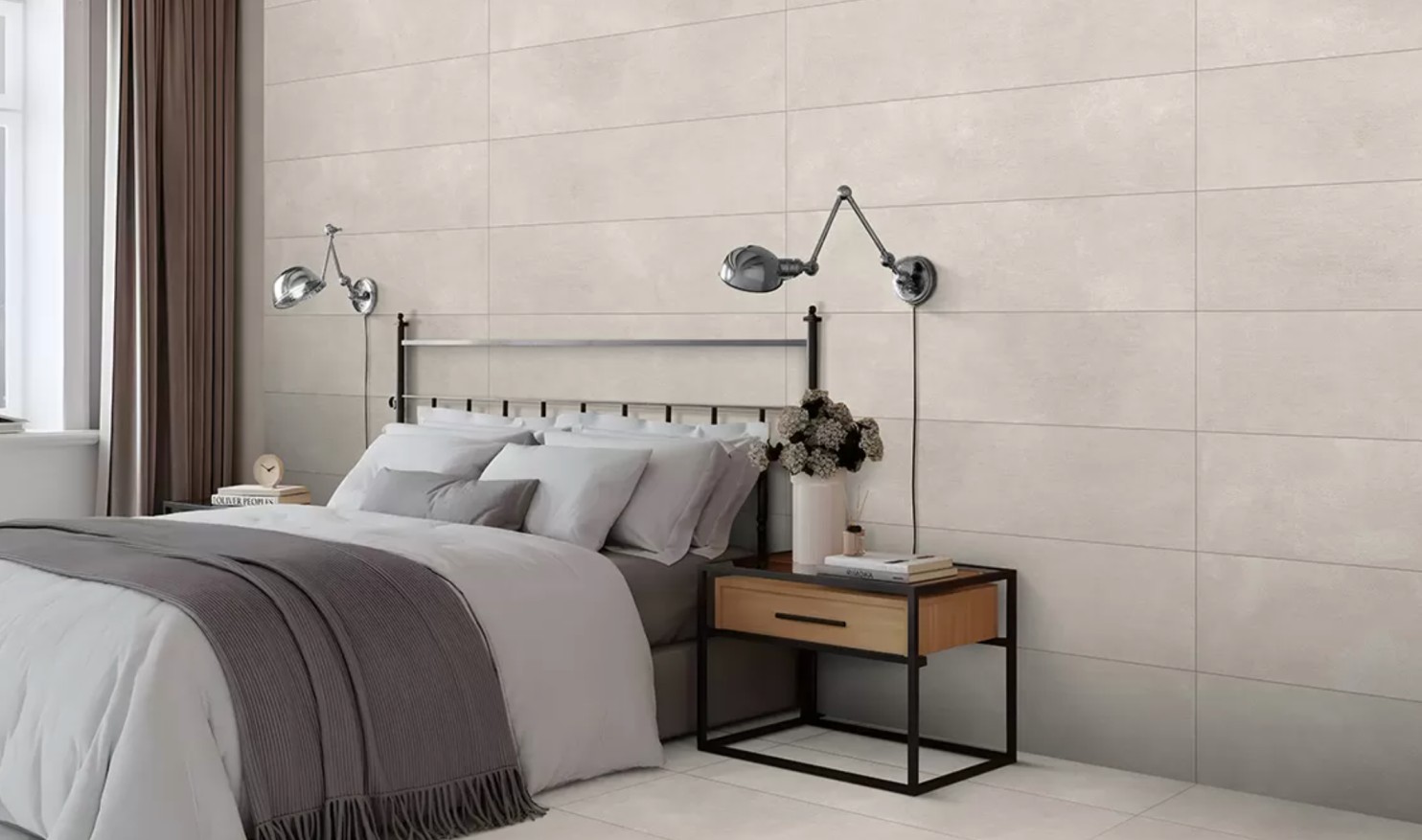
A similar shift has occurred in the use of Wall Tiles. Once limited to kitchens and bathrooms, they are now used across living and commercial spaces. Variations in texture and finish influence the atmosphere of an interior, whether by softening light or enhancing brightness.
In this context, we can now say that surface specification has become a design act, not a concluding decision.
Lavish Ceramics and the Contemporary Surface Paradigm
Within the broader discourse on modern Architectural Surfaces, Lavish Ceramics positions itself through material precision and a diverse range.
Its portfolio of Floor Tiles and Wall Tiles addresses both domestic and commercial applications, suggesting an understanding of varied performance requirements.
The strength of this approach does not lie only in offering multiple designs. It lies in the careful consideration of format, finish, and durability within coordinated collections.
Large-format tiles reduce visual interruption. Stone-inspired textures introduce material depth. Controlled colour palettes support visual balance.
Therefore, Lavish Ceramics stands not just as a manufacturer of Floor Tiles and Wall Tiles, but as an active participant in contemporary surface development.
Domestic Space and the Question of Continuity
In contemporary housing design, there is a growing preference for visual continuity across different rooms. Open-plan layouts now require surfaces that create unity while still allowing functional variation.
The use of coordinated Floor Tiles across living and transitional spaces helps establish a continuous spatial field. When fewer changes in material occur, the interior appears more connected.
Corresponding Wall Tiles, selected in related tones or textures, can further strengthen this coherence. In such cases, depth and variation are achieved through subtle differences in finish rather than through decorative additions.
The collections offered by Lavish Ceramics reflect this understanding of continuity. Their calibrated formats and coordinated colour families allow designers to apply Floor Tiles and Wall Tiles systematically.
Instead of functioning as separate elements, these surfaces, thus, operate together to produce a unified interior environment.
Commercial Environments and Material Endurance
Commercial buildings differ from residential buildings in terms of usage and intensity of activity.
Public spaces such as airports, hotels, office complexes, and shopping centres experience continuous movement of people. These spaces are cleaned frequently and are exposed to varying environmental conditions.
Therefore, the materials used in such environments must possess long-term strength and stability.
High-quality Floor Tiles used in these spaces must resist abrasion and maintain dimensional stability. If the material deteriorates easily, it affects both maintenance and appearance.
Similarly, Wall Tiles must remain stable under repeated cleaning and occasional impact, especially in high-contact areas.
Lavish Ceramics, through controlled manufacturing processes, provides Floor Tiles and Wall Tiles designed to meet these practical requirements. Thus, performance and design are treated as complementary aspects rather than separate concerns.
Texture, Light, and the Material Imagination
The interaction between light and surface is an important aspect of architectural design as well. When light falls on a material, its behaviour depends on the finish and texture of that surface.
A polished plane reflects light more directly and may increase brightness within an interior. A matte or textured surface, on the other hand, diffuses light and produces a softer visual effect.
For this reason, the treatment of Architectural Surfaces influences not only visibility but also the atmosphere of a space.
For example, stone-inspired or concrete-effect Wall Tiles demonstrate how ceramic materials can reproduce the appearance of natural surfaces while maintaining uniformity and durability. Similarly, slip-resistant Floor Tiles contribute to safety in circulation areas while preserving visual balance.
Lavish Ceramics incorporates these principles into its collections of Floor Tiles and Wall Tiles. And thus, in this interplay of tactility and optics, the surface becomes a medium of expression.
Wrapping Up
The development of Architectural Surfaces in recent years indicates a clear shift in architectural practice. Surfaces are no longer treated as secondary layers added after construction.
Through advances in ceramic technology, Floor Tiles and Wall Tiles now combine structural reliability, visual coherence, and long-term durability.
Within this evolving landscape of Architectural Surfaces, Lavish Ceramics stands at the forefront of material innovation. Through its advanced Floor Tiles and Wall Tiles collections, the brand demonstrates how surface systems can combine durability, continuity, and refined design.
In doing so, Lavish Ceramics contributes actively to redefining modern architectural practice rather than merely responding to it.
Similar Articles
Leave a Reply