
Browse products by
Filter By Type
Filter By Finish
Filter By Look
Filter By Application


Filter By Type
Filter By Look
Filter By Application
Filter By Size
Blog
Architectural Surfaces vs Traditional Wall Claddings
Feb 2026
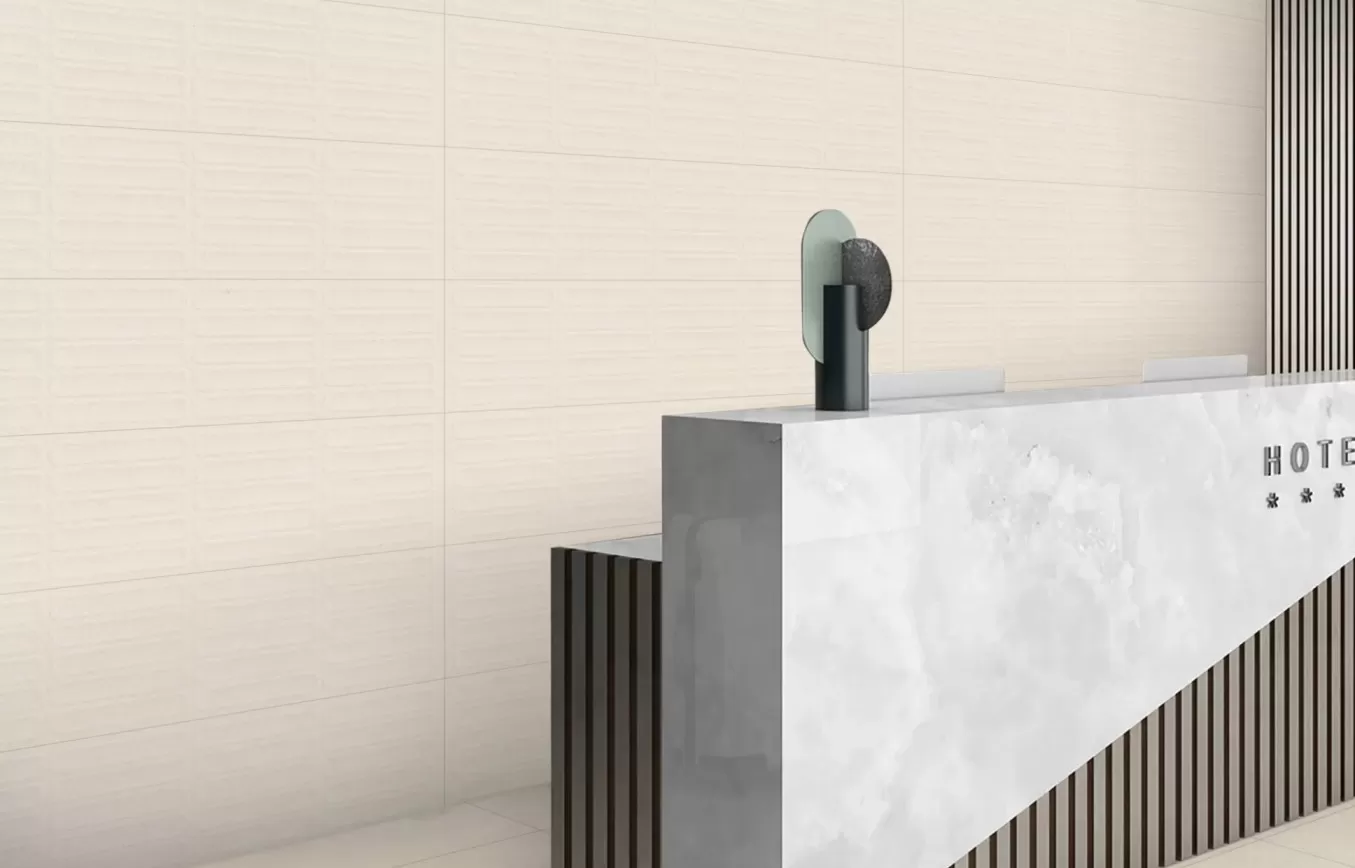
Interior spaces are shaped not only by structural systems but also by the materials that form their visible surfaces. Walls, floors, and ceilings together create the enclosure within which daily activities take place.
The choice of surface materials affects durability, maintenance, visual comfort, and the perception of scale. It also influences how a space is experienced over time.
With changes in technology and design thinking, methods of treating interior walls have gradually evolved. Among the approaches commonly observed today are traditional wall claddings and Architectural Surfaces.
While both address the finishing of vertical planes, they differ in intent, scale, and degree of integration within the design process.
Traditional Wall Claddings
Traditional wall claddings refer to materials that are applied over structural walls to improve protection and appearance. This system has been practiced for centuries in different architectural contexts and continues to serve practical and decorative purposes.
Common materials include Wall Tiles, natural stone slabs, wood panels, laminates, and similar modular finishes.
In many projects, Floor tiles and wall finishes are selected separately according to the functional needs of each area.
Characteristics
Layered Construction
The wall is first constructed and plastered. The cladding is then added as a finishing layer.
Modular Installation
Most traditional systems consist of smaller units or panels. Joints and seams are visible and often form part of the overall pattern.
Functional Specificity
The function of a room influences the materials used within it. Where water exposure is common, such as in kitchens and bathrooms, moisture-resistant Wall Tiles are considered suitable. Other areas may use finishes chosen mainly for comfort or appearance. Floor tiles are selected separately, keeping in mind their ability to bear weight and provide safe movement.
Localized Application
Different rooms may receive different finishes depending on budget, usage, and stylistic preference.
Traditional cladding systems are adaptable and relatively easy to maintain. Damaged units can often be replaced individually without affecting the entire wall surface.
Architectural Surfaces
Architectural Surfaces represent a more integrated method of material application. In this approach, the surface is not considered merely as a finishing layer but as part of the spatial concept itself.
Large-format engineered slabs and continuous surface systems are commonly associated with this method. Brands such as Lavish Ceramics have expanded this category by developing high-performance materials suitable for both vertical and horizontal use.
Characteristics
Conceptual Integration
Material selection often occurs in the early stages of design planning. The chosen surface may influence proportion, rhythm, and spatial balance.
Scale and Continuity
Manufacturing developments have changed the scale at which surface materials are produced. Larger formats are now common, and this naturally reduces the number of visible joints.
When interruptions are minimized, the eye reads the space differently. Wall Tiles and Floor tiles can then appear as parts of a coordinated surface rather than isolated finishes.
Material Performance
Engineered surfaces used today are designed for durability. In addition to their visual appeal, they are manufactured to withstand exposure to moisture and everyday wear. Their ability to resist stains further supports long-term use.
Precision Detailing
Because of their scale, Architectural Surfaces require careful alignment at corners and junctions to maintain visual continuity.
In this system, surfaces contribute directly to the space’s architectural identity.
Aesthetic Expression and Spatial Identity
Surface treatment plays a role in defining the character of interiors. Traditional claddings allow for variation through pattern, color, and texture. Designers may use different Wall Tiles or finishes to distinguish functional zones or create focal points.
Architectural Surfaces are often planned to reduce visual breaks within a space. When Floor tiles and wall finishes are selected together, the interior may appear more connected.
In such cases, design expression does not depend heavily on visible joints or strong pattern divisions. Instead, variation may be introduced through differences in tone, surface texture, or the material’s scale.
Maintenance and Longevity
Durability remains an important factor in surface selection.
Modular Wall Tiles and Floor Tiles provide practical advantages for maintenance because individual sections can be repaired or replaced as needed. This approach suits projects where phased execution or future modifications are anticipated.
Architectural Surfaces, particularly in large formats, are designed for long-term performance. Reduced joint lines may limit dirt accumulation and contribute to the ease of cleaning.
However, careful installation is essential, as alignment and substrate preparation directly affect the outcome. When executed correctly, such surfaces maintain both structural stability and visual consistency over time.
Manufacturers such as Lavish Ceramics emphasize precision and material strength to support this longevity.
Comparative Perspective
Traditional wall claddings are usually discussed in relation to protection and surface finishing. They are applied after construction and are often chosen for practical reasons as much as for appearance.
Architectural Surfaces are approached differently. In many projects, they are considered earlier in the planning stage, and they may influence how the space is perceived as a whole.
Even so, both systems continue to be used in present-day interiors. In some situations, a modular cladding system may be more convenient. In others, a more continuous surface may be appropriate.
The selection depends on several factors, including the size of the project, the purpose of the space, financial constraints, and the client’s expectations. For this reason, the two approaches should be understood in relation to context rather than as a matter of preference.
Wrapping Up
The progression from traditional wall claddings to Architectural Surfaces reflects an expansion of material possibilities in interior design.
While traditional systems continue to fulfill essential functional roles, integrated surface solutions offer new ways of shaping spatial experience.
By combining thoughtful engineering with coordinated Wall Tiles and Floor tiles, manufacturers such as Lavish Ceramics contribute to interiors that are both durable and visually coherent.
Similar Articles
Leave a Reply