
Browse products by
Filter By Type
Filter By Finish
Filter By Look
Filter By Application


Filter By Type
Filter By Look
Filter By Application
Filter By Size
Blog
Types of Ceramic Tiles: A Complete Guide for Modern Homes in 2026
Mar 2026
Choosing tiles used to be mostly about durability. That part is largely taken care of now, with most modern materials holding up well under regular use.
What tends to matter more is how a tile works in a specific space. A living room, a bathroom, and a terrace all behave differently, and the same surface rarely fits all of them.
Thus, the different types of ceramic tiles are easier to think about in terms of use rather than finish. The decision is not really about picking one finish, but about understanding where each type actually works.
Lavish Ceramics builds around this shift, combining Spanish digital printing with materials designed for everyday use, not just controlled showroom environments.From Lavish Ceramics’ catalogue, here’s a closer look at the tile types that are actually relevant in a modern home today, along with where they tend to work best.
GVT & PGVT: Starting with the Living Room
Most tile selections begin with the living room, since it sets the tone for the rest of the house.
Glazed Vitrified Tiles (GVT) are one of the most commonly used options. They are typically available in sizes like 600×600 mm and 600×1200 mm, and they offer a wide range of designs, including marble and stone finishes.
Because these tiles have a glazed surface, they resist stains and are easy to clean. This is why, in the comparison between glazed vs unglazed ceramic tiles, glazed tiles are generally preferred for residential use.
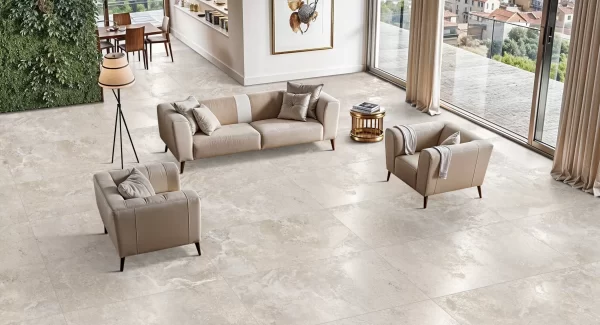
Polished Glazed Vitrified Tiles (PGVT) have the same base as GVT but come with a polished surface. This allows them to reflect light, making a room appear brighter and slightly more spacious.
For example, if a living room does not receive much natural light, using a light-coloured PGVT tile can help improve the overall brightness of the space.
When comparing matte vs glossy ceramic tiles, PGVT falls on the glossy side. While it works well in dry areas like living rooms, it is usually avoided in spaces that are frequently wet.
Double-Charged Tiles: For Kitchens and High-Use Areas
As you move to spaces like kitchens and hallways, durability becomes more important than finish.
Double-charged tiles are one of the most reliable ceramic floor tiles types for such areas. These tiles are manufactured by compressing two layers together, with the upper layer being thicker, usually around 3 to 4 mm.
This ensures that the design does not wear off easily, even with frequent use.
For example, in a kitchen where there is constant movement, spills, and cleaning, double-charged tiles perform better over time compared to more decorative options.
They are usually available in 600×600 mm sizes and are chosen more for their strength than their design variety.
Large Format Tiles: For Open Layouts
Large-format tiles are increasingly used in homes with open layouts.
Tiles in sizes such as 800×1600 mm and 1200×1800 mm reduce the number of grout lines on the floor. This creates a more continuous surface, which helps the space look less segmented.
For instance, in a combined living and dining area, using large tiles can make the floor appear more uniform and connected.
These tiles are also being used on walls, especially for feature areas like TV panels. This has expanded the range of ceramic wall tile varieties, moving beyond smaller, traditional formats.
Outdoor Tiles: Balcony, Terrace, and Parking Areas
Outdoor spaces require tiles that can handle different conditions.
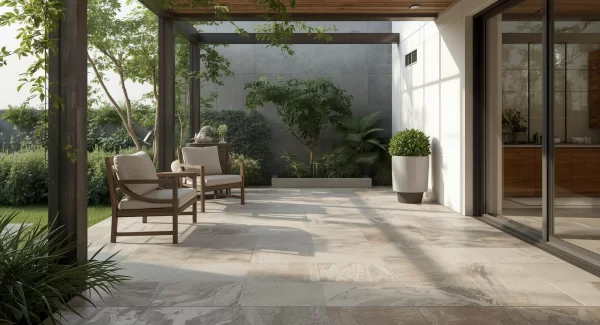
These tiles are usually around 20 mm thick and are designed to withstand weather changes, moisture, and weight. They also have a rough surface to provide better grip.
For example, using a smooth tile on a balcony can become risky during the monsoon. A textured outdoor tile reduces the chances of slipping and performs better over time.
In these areas, safety and durability are more important than visual finish.
Full Body and Soluble Salt Tiles
These tiles are used based on how much wear and tear a space is expected to handle.
Full body tiles have a uniform colour throughout their thickness. This means that if the tile chips, the damage is less visible. They are commonly used in staircases, utility areas, or workspaces where durability is important.
Soluble salt tiles are more cost-effective and are generally used in bedrooms or low-traffic areas. For example, if you are designing a guest bedroom, a 600×600 mm soluble salt tile can provide a clean and simple finish without increasing the overall cost.
Both of these fall under broader types of ceramic tiles, but they serve different purposes.
Additional Options You May Consider
Once the main areas are covered, some additional tile types can be useful for specific requirements.
Wood-Look Plank Tiles
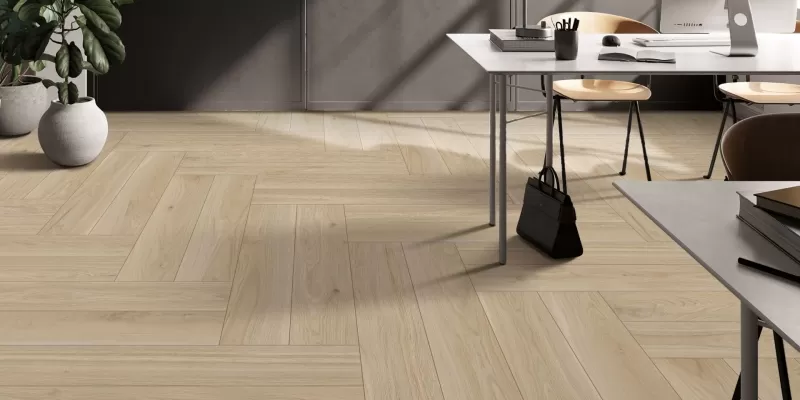
Wood-look tiles are available in sizes such as 200×1200 mm and 300×1200 mm. These tiles replicate the appearance of wooden flooring without requiring the same level of maintenance.
For example, in a bedroom, they can create a warmer feel while still being easy to clean. Collections like Stratos and Sahara use textures that match the printed grain, which makes them look more realistic.
Designer Wall Tiles
Designer wall tiles are usually available in sizes like 300×600 mm and include textured or slightly three-dimensional surfaces.
They are commonly used for kitchen backsplashes or bathroom feature walls. This category has expanded the range of ceramic wall tile varieties, with more focus on subtle textures rather than bold patterns.
Porcelain vs Ceramic Tiles
The comparison between porcelain vs ceramic tiles is quite common during the selection process.
In practice, many of the tile categories used in homes today include both vitrified and porcelain options, even though they are often grouped under ceramic tiles.
Porcelain tiles tend to hold up better in tougher conditions, especially where there’s more movement or exposure to moisture. Ceramic tiles are easier to handle and install, so they’re usually used on walls or in areas that don’t see as much wear.
In most homes, both materials are used, depending on the requirements of each space.
Wrapping Up
There is no single answer to the best ceramic tiles for the home, because each area has different requirements.
A living room benefits from tiles that enhance light and space, while a kitchen needs tiles that are easy to clean. Bathrooms require anti-slip surfaces, and bedrooms can focus more on comfort and cost.
Selecting tiles based on each space usually leads to a more practical and balanced result.
And what’s changing in 2026?
Larger tile sizes are becoming more common, especially in open layouts. Warmer colour tones are gradually replacing cooler shades. Matte and satin finishes are being used more frequently, and designs are becoming simpler and more uniform.
If you approach tile selection in this way, the process becomes more manageable. Instead of trying to find one ideal tile, you are simply choosing the right option for each space.
Similar Articles
Leave a Reply