
Browse products by
Filter By Type
Filter By Finish
Filter By Look
Filter By Application


Filter By Type
Filter By Look
Filter By Application
Filter By Size
Blog
Matte vs Glossy Tiles: Which Tile Finish Is Best for Your Home?
Mar 2026

Tile selection is often reduced to a visual decision, something settled by what feels right in the moment.
But over time, it starts to do far more than just sit there and look good. It shapes how a space is used, how it feels, and sometimes even how it ages.
The finish plays a larger role in this than it is usually given credit for. It influences how light settles rather than just reflects, how quickly a surface begins to look lived-in, how secure the floor feels underfoot on an ordinary day, and how gradually small marks or wear begin to show themselves.
None of this is obvious at the point of installation, which is perhaps why it gets overlooked.
So the question of matte vs glossy tiles is not really about which one looks better in a freshly done room. That part is easy to judge.
The more useful question is which one continues to make sense once the space has been used for a while. Thus –
Let’s Understand Matte and Glossy Finishes in Detail
At the most fundamental level, the distinction lies in how the tile surface interacts with light and touch.
Matte finish tiles are not entirely flat in the way they first appear. Their surface carries a fine, almost imperceptible texture that softens how light behaves.Instead of bouncing it back directly, the light gets dispersed, which reduces glare and keeps the surface visually steady. That is also why matte finishes tend to feel closer to natural materials.
This softer interaction with light changes how a space is experienced over time. There is less visual interruption, fewer sudden reflections catching the eye.
The result is a setting that feels calmer, a bit more grounded, and easier to stay in for longer stretches without that subtle visual fatigue building up.
Glossy finish tiles move in the opposite direction. Their surface is deliberately smoothed and polished to create reflectivity. Light does not scatter here; it returns, often quite sharply, depending on how strong the source is.Because of this, rooms tend to feel brighter, sometimes even larger than they really are, simply because more light is being thrown back into the space.
That quality can be especially useful in tighter areas or rooms that do not receive much natural light.
Matte vs Glossy Tiles: A Deeper Tile Finish Comparison
A proper tile finish comparison is justified only when it covers properties beyond appearance, focusing on how each surface behaves under real conditions. So, here it is.
Light Interaction and Spatial Perception
Glossy tiles enhance light distribution. In rooms with limited lighting, they can significantly improve brightness by reflecting both natural and artificial light.
This is one of the main reasons glossy tiles for living room spaces are often chosen in apartments or enclosed layouts, where maximizing light becomes important.
Though excessive reflection can create glare, especially in rooms with strong lighting or large windows. This can make the space feel visually busy.
Matte tiles absorb and diffuse light, which reduces glare and creates a more controlled visual environment. The space may appear slightly less bright, but it often feels more balanced and easier on the eyes.
Cleaning Patterns and Daily Maintenance
Glossy tiles are simple to clean because their surface does not trap dirt. A wipe is often sufficient to remove stains or spills. This makes them suitable for vertical applications such as walls and backsplashes.
However, glossy tiles also make surface imperfections more visible.
Water spots, streaks, and fingerprints are easily noticeable, especially under direct lighting. This means that while cleaning is easy, it may need to be done more frequently to maintain a spotless appearance.
Matte tiles are not like that. Their texture helps conceal dust, minor stains, and everyday marks. As a result, the space tends to look cleaner for longer periods, even without frequent maintenance.
A minor trade-off is that when deep cleaning is required, matte tiles may need more effort, as dirt can settle slightly into the textured surface.
Safety and Slip Resistance
Safety becomes an important factor, particularly for flooring.
Glossy tiles have a smooth surface that reduces friction when wet. So, they are a strict no in water-prone areas, especially in bathrooms, kitchens, and entryways where water exposure is common.
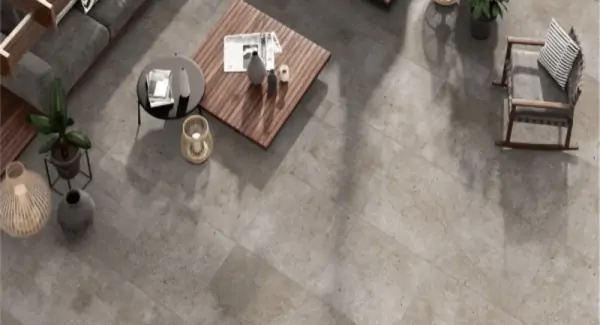
Matte tiles offer better grip because of their textured finish. This makes matte tiles for floor applications a more practical and safer choice in areas where moisture or heavy foot traffic is expected.
Durability and Visual Aging
All tiles undergo wear, but the way that wear appears differs significantly between finishes.
Glossy tiles tend to make imperfections more obvious. Even a small scratch or scuff can stand out because it interrupts the reflective surface. Though they do not hold onto dirt as easily. With regular cleaning, they often continue to look relatively polished despite minor marks.
Matte tiles, by comparison, are less revealing. Their non-reflective surface allows small imperfections to blend in, which helps maintain a consistent appearance even after prolonged use.
Moving From “Which Is Better” To “Where It Is Best Used”
Understanding where each finish performs best simplifies the decision.
Bathroom
Bathrooms require a balance between safety and brightness.
Using matte finish tiles on the floor reduces the risk of slipping, especially in wet conditions. On the other hand, glossy finish tiles on walls help reflect light, making the space feel cleaner and more open.
This combination is widely used because it addresses both functional and visual needs effectively.
Kitchen
Kitchens demand both durability and ease of maintenance.
Glossy tiles are well-suited for backsplashes, where grease and stains are common. Their smooth surface allows quick cleaning without scrubbing.
For flooring, matte tiles for floor use are more practical. They handle foot traffic better and do not show dirt or spills as prominently.
Living Room
The living room allows more flexibility, as the choice depends on the desired atmosphere.
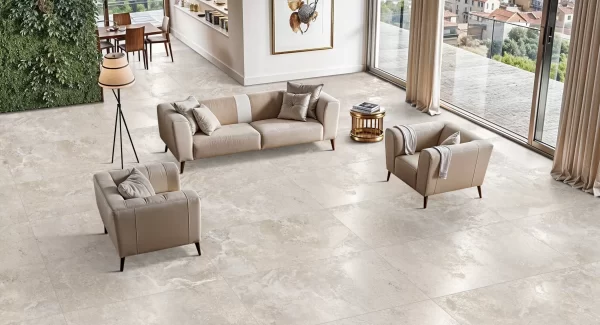
Glossy tiles for living room spaces create a brighter and more polished look. They reflect light and can make the area feel more expansive.Matte tiles create a more grounded and comfortable environment. They provide a neutral base that allows furniture and décor to stand out without visual competition.
Bedroom
Bedrooms benefit from a calm and controlled environment.
Matte tiles are generally more suitable here, as they reduce glare and contribute to a softer visual experience. This aligns better with the purpose of the space.
Entryways and Hallways
These areas experience the highest level of wear and exposure to dirt and moisture.
Matte tiles are the better option because they provide grip and conceal wear more effectively. Glossy tiles in these areas tend to show both dirt and scratches quickly.
Why Tile Quality Remains Critical
The effectiveness of a finish depends heavily on how well the tile is made.
Factors such as density, glaze quality, and surface treatment determine how the tile performs over time.
With Lavish Ceramics, attention to these details ensures that both matte and glossy finishes retain their appearance and durability.
A high-quality glossy tile from Lavish Ceramics maintains clarity without becoming patchy, while a well-crafted matte tile appears refined rather than dull.
Wrapping Up
The choice between shiny vs matte tiles should be based on function as much as appearance.
Glossy tiles are effective in enhancing light and creating a sense of openness. Matte tiles offer better safety, hide wear more effectively, and are easier to live with in high-use areas.
A balanced combination of both finishes often delivers the most practical and visually satisfying result.
Once these differences are understood, selecting the right tile finish becomes a matter of applying the right material to the right space, rather than relying on preference alone.
Similar Articles
Leave a Reply