
Browse products by
Filter By Type
Filter By Finish
Filter By Look
Filter By Application


Filter By Type
Filter By Look
Filter By Application
Filter By Size
Blog
Is Glazed Porcelain Tile Good for Bathroom Floors?
Nov 2026

Choosing the right flooring for a bathroom is important because the space is regularly exposed to water, moisture, soap and cleaning products. Bathroom flooring should be durable, easy to maintain, visually appealing and, most importantly, safe to walk on when wet. Among the many flooring options available, glazed porcelain tiles are a popular choice for modern bathrooms.
But are glazed porcelain tiles actually suitable for bathroom floors? The answer is yes, provided you select the right finish, texture and slip-resistance rating. These tiles offer a combination of durability, low water absorption and design flexibility, making them suitable for many residential and commercial bathroom applications.
In this guide, we will explore the benefits, limitations, design options and important factors to consider before choosing glazed porcelain tiles for your bathroom.
What Are Glazed Porcelain Tiles?
Glazed porcelain tiles are manufactured using refined clay and other mineral materials that are pressed and fired at high temperatures. A decorative glaze is applied to the tile surface, creating its colour, pattern, texture and finish.
The porcelain body makes these tiles dense and durable, while the glazed surface provides additional design possibilities. They are available in several appearances, including marble, stone, concrete, wood and contemporary patterns.
Unlike ordinary ceramic tiles, porcelain tiles generally have lower water absorption, making them suitable for moisture-prone areas such as bathrooms, kitchens and utility spaces.
Is Glazed Porcelain Tile Good for Bathroom Floors?
Yes, glazed porcelain tiles can be an excellent option for bathroom floors. Their low porosity, durability and wide range of designs make them suitable for bathrooms when the correct product is selected.
However, not every glazed porcelain tile is appropriate for wet flooring. Highly polished or glossy surfaces may become slippery when wet. Therefore, choosing a tile with a suitable anti-slip surface and a tested slip-resistance rating is essential.
For bathroom floors, consider matt, textured or specially designed anti-slip finishes rather than selecting tiles based only on their appearance.
Benefits of Using Glazed Porcelain Tiles in Bathrooms
1. Low Water Absorption
One of the biggest advantages of porcelain tiles is their low water absorption. Properly manufactured porcelain tiles are generally classified as having water absorption of 0.5% or less.
This makes them a practical choice for bathrooms, where floors are frequently exposed to moisture and water splashes. However, proper grouting and waterproofing beneath the tiles remain essential.
2. Durable and Long-Lasting
Bathroom floors experience regular foot traffic, furniture movement and exposure to cleaning products. Glazed porcelain tiles are designed to withstand everyday use and can maintain their appearance for many years when installed and maintained correctly.
Their durability makes them suitable for family bathrooms, guest bathrooms and selected commercial spaces.
3. Wide Range of Designs
Glazed porcelain tiles are available in numerous colours, patterns, sizes and finishes. Homeowners can choose designs that complement different bathroom styles.
Popular options include:
- Marble-look porcelain tiles
- Natural stone-look tiles
- Concrete-look tiles
- Wood-look porcelain tiles
- Plain and minimalist designs
- Decorative patterned tiles
This design flexibility makes it easier to create a coordinated bathroom interior.
4. Easy to Clean and Maintain
The glazed surface generally makes everyday cleaning straightforward. Dust, soap residue and common bathroom stains can usually be removed with a soft mop, water and a suitable pH-neutral cleaning solution.
Avoid harsh chemicals and abrasive cleaning tools unless the tile manufacturer specifically recommends them.
5. Resistance to Common Bathroom Stains
Glazed porcelain tiles generally offer good resistance to many common household stains. Their dense body and finished surface make them practical for areas exposed to toiletries, soap and regular cleaning.
For the best results, clean spills promptly and follow the manufacturer’s maintenance instructions.
6. Suitable for Different Bathroom Styles
Whether you prefer a luxurious marble-inspired bathroom or a simple contemporary design, glazed porcelain tiles offer plenty of options. You can use complementary wall and floor designs to create a consistent appearance throughout the space.
Best Glazed Porcelain Tile Finishes for Bathroom Floors
The finish of a tile plays a significant role in bathroom safety and appearance.
Matt Finish
Matt glazed porcelain tiles are a popular choice for bathroom floors. Their understated appearance works well in modern and traditional interiors. Depending on the surface texture and tested slip-resistance performance, they can provide better grip than smooth polished tiles.
Textured Finish
Textured tiles have a more pronounced surface that may improve traction underfoot. They are worth considering for shower areas and bathrooms that regularly remain wet.
However, texture alone does not guarantee slip resistance. Always check the product’s tested performance.
Satin Finish
Satin-finish tiles offer a subtle sheen without the highly reflective appearance of polished surfaces. They can create an elegant bathroom look, but their suitability for wet floors should be confirmed through the manufacturer’s slip-resistance specifications.
Polished or Glossy Finish
Polished glazed porcelain tiles create a bright, luxurious appearance and reflect light effectively. However, smooth glossy surfaces can become slippery when wet.
They are generally better suited to bathroom walls or dry areas unless the specific product has been tested and approved for the intended wet-floor application.
7 Popular Glazed Porcelain Tile Design Ideas for Bathrooms
Here are some design ideas to help you create an attractive and functional bathroom.
1. Marble-Look Tiles
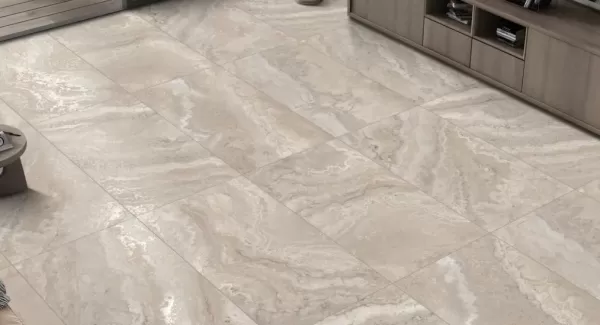
Marble-inspired porcelain tiles bring a luxurious appearance to bathroom interiors. White, beige and grey patterns work particularly well with modern fittings.
2. Grey Concrete-Look Tiles
Grey concrete-look tiles create a contemporary, minimalist atmosphere. They pair well with black, chrome and brushed-metal bathroom accessories.
3. Beige Stone-Look Tiles
Beige stone-inspired designs introduce warmth and a natural appearance. They are suitable for bathrooms with wooden cabinets and neutral colour schemes.
4. Wood-Look Porcelain Tiles
Wood-look porcelain tiles provide the visual warmth of timber without using natural wood flooring. They can create a spa-inspired bathroom when selected with an appropriate wet-area finish.
5. Large-Format Tiles
Large-format tiles can create a more seamless appearance by reducing the number of grout joints. Ensure that the tile size is suitable for the bathroom layout and floor slope.
6. Dark Grey Tiles
Dark grey tiles add depth and a sophisticated feel. Pair them with lighter walls and good lighting to prevent a small bathroom from feeling too enclosed.
7. Patterned Floor Tiles
Decorative glazed porcelain tiles can become the focal point of a bathroom. Use subtle wall colours and simple fittings to balance the overall design.
Important Factors to Consider Before Choosing Bathroom Floor Tiles
Before purchasing glazed porcelain tiles, evaluate the following points:
1. Slip Resistance: This should be a priority. Ask the supplier for the tile’s tested slip-resistance rating and confirm whether it is suitable for the intended wet area.
2. Surface Finish: Matt and textured options are often worth considering for bathroom floors. Do not assume that every matt tile is automatically anti-slip.
3. Tile Size: Select a size that works with the bathroom dimensions, drainage layout and required floor slope. Smaller tiles may be useful in shower areas because additional grout joints can help accommodate slopes.
4. Water Absorption: Check the manufacturer’s technical specifications to confirm that the tile is porcelain and suitable for the intended application.
5. Grout Selection: Choose an appropriate grout and ensure that joints are properly filled and maintained to reduce water penetration and staining.
6. Installation Quality: Professional installation is essential. Correct waterproofing, adhesive selection, floor levelling and drainage are particularly important in bathrooms.
Glazed Porcelain Tiles vs Ceramic Tiles for Bathroom Floors
Both glazed porcelain and ceramic tiles are used in bathrooms, but they have some differences.
| Feature | Glazed Porcelain Tiles | Ceramic Tiles |
|---|---|---|
| Water absorption | Generally 0.5% or less | Usually higher |
| Density | Higher | Comparatively lower |
| Durability | Generally suitable for heavier use | Depends on product grade |
| Design options | Wide range | Wide range |
| Maintenance | Generally easy | Generally easy |
| Bathroom suitability | Excellent with suitable finish | Suitable with correct product selection |
For bathroom flooring, porcelain tiles are often preferred because of their low water absorption and durability. However, the specific tile’s slip resistance and intended application should guide the final decision.
How to Maintain Glazed Porcelain Bathroom Floor Tiles
Proper maintenance helps preserve the appearance and performance of your bathroom flooring.
- Sweep or vacuum regularly to remove dust and loose particles.
- Clean the floor using a soft mop and mild cleaning solution.
- Avoid abrasive brushes that may damage the glazed surface.
- Remove soap residue and hard-water deposits using manufacturer-approved cleaners.
- Inspect grout joints periodically and repair damaged sections.
- Keep bathroom drainage clear to prevent water from collecting on the floor.
Regular cleaning also helps reduce the buildup of soap residue that can make bathroom floors feel slippery.
Frequently Asked Questions (FAQs)
1. Are glazed porcelain tiles waterproof?
Porcelain tiles have very low water absorption, but they should not be considered a complete waterproofing system. Proper substrate waterproofing, grouting and installation are necessary to protect the bathroom structure.
2. Are glossy glazed porcelain tiles slippery?
They can become slippery when wet, particularly if the surface is smooth. For bathroom floors, check the tested slip-resistance rating and consider matt or textured alternatives.
3. Are glazed porcelain tiles suitable for shower floors?
Some glazed porcelain tiles are suitable for shower floors, provided they have appropriate slip-resistance characteristics and can be installed correctly with the required drainage slope. Smaller formats may be more practical for sloped shower floors.
4. Do glazed porcelain tiles stain easily?
Quality glazed porcelain tiles generally offer good stain resistance. Regular cleaning and suitable maintenance help keep the surface looking attractive.
5. Are porcelain tiles better than ceramic tiles for bathrooms?
Porcelain tiles generally have lower water absorption and higher density than standard ceramic tiles. Both can be used in bathrooms, but porcelain is often preferred for flooring, subject to the product’s slip resistance and installation requirements.
Conclusion
Glazed porcelain tiles can be an excellent choice for bathroom floors because they combine durability, low water absorption, easy maintenance and attractive design options. From marble-inspired patterns to modern concrete and natural stone looks, they offer plenty of possibilities for creating stylish bathroom interiors.
The most important consideration is selecting the right surface finish. Choose a tile with verified slip-resistance performance for wet areas, and ensure that waterproofing, drainage and installation are handled correctly.
At Lavish Ceramics, you can explore a variety of tile designs and finishes to complement contemporary interiors. Select bathroom tiles that balance visual appeal, practical performance and everyday safety to create a bathroom that looks beautiful and works well for years to come.
Similar Articles
Leave a Reply