
Browse products by
Filter By Type
Filter By Finish
Filter By Look
Filter By Application


Filter By Type
Filter By Look
Filter By Application
Filter By Size
Blog
GVT vs Double Charge vs Full Body Tiles: Which Is Right for You?
May 2026
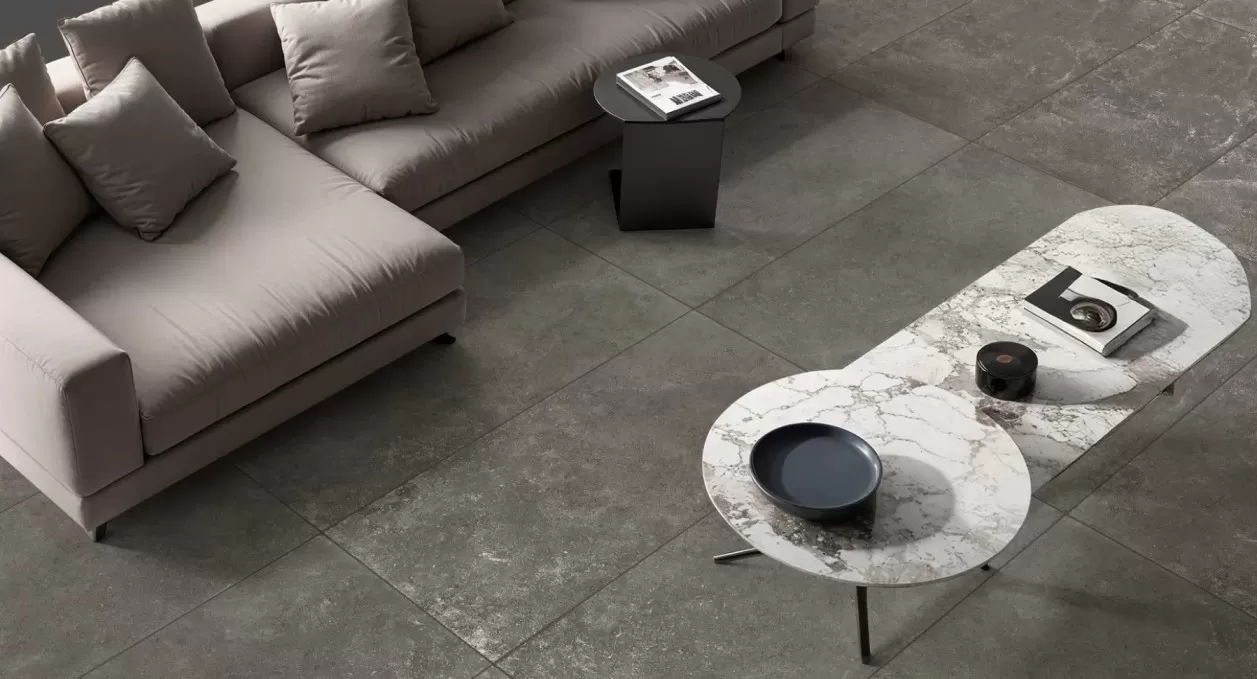
Walk into any tile showroom in India and you’ll hear these three terms within minutes: GVT, double charge, full body. Ask three different salespeople what the difference is and you may get three different answers. Browse online and you’ll find articles that either oversimplify the distinctions or bury them in technical language that leaves you more confused than when you started.
This guide cuts through all of that. If you’re choosing tiles for a home renovation, a commercial project, or a new construction and you want to understand the real difference between GVT tiles, double charge tiles, and full body tiles before you spend a rupee you’re in the right place.
We’ll cover exactly what each tile type is, how it’s made, where it performs best, what it costs, and which one is right for your specific application. And because Lavish Ceramics is one of India’s leading full body tile manufacturers in Morbi, the ceramic capital of the world, we’ll give you the kind of honest, manufacturer-level insight you won’t find in a generic buying guide.
First: Why Do These Categories Exist?
All three tile types GVT, double charge, and full body are vitrified tiles. Vitrification is the process of firing a tile at extremely high temperatures (above 1200°C) until the silica in the clay body fuses into a glass-like structure. This makes the tile dense, non-porous, and highly resistant to water, staining, and wear.
What separates GVT, double charge, and full body tiles from each other is not the base firing process, it’s how the colour and pattern are applied, and how deep that colour penetrates through the thickness of the tile. That single difference has enormous consequences for durability, aesthetics, maintenance, and appropriate application.
GVT Tiles (Glazed Vitrified Tiles)
What Are GVT Tiles?
GVT stands for Glazed Vitrified Tiles. These are vitrified tiles with a glaze, a layer of liquid glass containing pigments and decorative elements applied to the surface before the final firing. The glaze is what carries the colour, pattern, and finish of a GVT tile.
Modern GVT tiles use high-definition digital printing technology to apply photorealistic designs onto the glaze layer before firing. This is why GVT tiles can replicate the look of marble, wood, fabric, concrete, stone, and virtually any other surface with extraordinary accuracy. The design possibilities are essentially unlimited.
How Are GVT Tiles Made?
The base tile body white or off-white vitrified clay is formed and bisque-fired first. The surface is then digitally printed with the chosen design, coated with a protective glaze layer, and fired again at high temperature. The result is a tile with a glass-hard surface that is scratch-resistant, stain-resistant, and available in an enormous range of finishes: high-gloss, matte, satin, sugar, metallic, and textured.
Where Do GVT Tiles Perform Best?
GVT tiles are the most versatile of the three categories suitable for both walls and floors, in residential and light commercial applications. Their design flexibility makes them the first choice for:
- Living room floors where aesthetic variety is important
- Bedroom floors in wood-effect, marble-effect, or stone-effect finishes
- Bathroom walls and floors
- Kitchen floors and splashbacks
- Feature walls in residential and hospitality settings
What Are the Limitations of GVT Tiles?
Because the design and colour exist only in the glaze layer which sits on top of the tile body, heavy scratching or chipping can expose the base tile body underneath, which is a different colour. In very high-traffic commercial environments with abrasive foot traffic (shopping malls, airports, industrial floors), the glaze layer can show wear over time.
GVT Tile Sizes at Lavish Ceramics
Our GVT range includes sizes from 300×600mm wall tiles to 800×1600mm large-format floor tiles, in polished, matte, and textured finishes.
Double Charge Tiles
What Are Double Charge Tiles?
Double charge tiles get their name from the manufacturing process: two layers of pigmented granules are charged (pressed) together to form a single tile body before firing. The design, typically a simple, bold pattern in two or three colours, penetrates 3 to 4 millimetres into the thickness of the tile, rather than sitting only on the surface as a glaze does.
How Are Double Charge Tiles Made?
A base layer of pigmented vitrified granules is laid into a mould. A second layer with a different colour is then pressed on top using a special double-press system that creates a marbled or veined pattern through the top few millimetres of the tile. The combined layers are pressed under enormous pressure and fired at high temperature. No glaze is applied the colour is baked into the tile body itself.
After firing, double charge tiles are ground and polished to a mirror finish, which is why they are almost always available in a high-gloss, highly reflective surface.
Where Do Double Charge Tiles Perform Best?
Because the colour goes 3–4mm deep into the tile, double charge tiles are significantly more resistant to surface wear than GVT tiles. Even with scratching, the colour continues through the damaged layer rather than revealing a different-coloured base. This makes them ideal for:
- High-traffic residential floors — entrance halls, living rooms, corridors
- Medium-traffic commercial floors — offices, showrooms, retail stores
- Areas where a polished, reflective finish is desired
- Large open floor areas where the classic marbled or veined double charge aesthetic suits the design
What Are the Limitations of Double Charge Tiles?
Double charge tiles have a narrower design range than GVT. Because the pattern is created by pressing two layers of granules rather than digital printing, the designs available are limited to relatively simple marbled, veined, and geometric effects you won’t find realistic wood-effect or photorealistic stone-effect patterns in a double charge tile. They also come almost exclusively in polished finishes, which can be slippery when wet making them less suitable for bathrooms and outdoor areas without additional anti-slip treatment.
Double Charge Tile Sizes at Lavish Ceramics
Our double charge range focuses on the most popular floor formats: 600×600mm, 800×800mm, and 600×1200mm, all in polished finish.
Full Body Tiles
What Are Full Body Tiles?
Full body tiles also called through-body tiles take the double charge concept to its logical conclusion: the colour and pattern run uniformly through the entire thickness of the tile, from top surface to bottom. There is no separate glaze layer and no colour gradient the tile looks the same whether you’re looking at its face, its edge, or a cross-section through its middle.
How Are Full Body Tiles Made?
The entire tile body is formed from uniformly pigmented vitrified granules the same colour and composition throughout. The granules are pressed under extremely high pressure and fired at high temperature. Because there is no glaze layer and no variation in composition through the tile, full body tiles are the densest, hardest, and most durable tiles in the vitrified category.
As a full body tile manufacturer in Morbi, Lavish Ceramics produces full body tiles to international standards with rigorous testing for water absorption, breaking strength, abrasion resistance, and chemical resistance.
Where Do Full Body Tiles Perform Best?
Full body tiles are the specification choice wherever maximum durability is the primary requirement:
- Heavy commercial flooring: airports, hospitals, railway stations, shopping malls, industrial facilities
- High-traffic public spaces: hotel lobbies, convention centres, government buildings
- Outdoor areas: full body porcelain tiles rated for exterior use perform exceptionally well on terraces, pathways, and plazas
- Locations where chipping is a concern: because the colour runs all the way through, chips and edge damage are far less visible on full body tiles than on GVT or double charge tiles
- Export projects: full body tiles are a preferred specification for infrastructure and commercial projects in the Middle East, Africa, and Southeast Asia — markets that Lavish Ceramics serves extensively
What Are the Limitations of Full Body Tiles?
Full body tiles offer fewer design options than GVT photorealistic patterns and complex decorative effects are not achievable through the full-body manufacturing process. They typically come in solid colours, salt-and-pepper speckle effects, and simple tonal variations. If you need a wood-look, marble-look, or decorative pattern, GVT is the right choice. If you need maximum durability in a solid or subtly textured colour, full body is the specification.
Head-to-Head Comparison
| Feature | GVT Tiles | Double Charge Tiles | Full Body Tiles |
|---|---|---|---|
| Colour depth | Surface glaze only | 3–4mm deep | Full thickness |
| Design variety | Unlimited — digital print | Limited — marble/vein patterns | Solid & speckle tones |
| Durability | Good | Very good | Excellent |
| Best finish | Gloss, matte, satin, textured | Polished (high gloss) | Matte, natural, polished |
| Slip resistance | Available in matte/textured | Lower — polished surface | Available in textured |
| Best for | Residential floors & walls | High-traffic residential floors | Heavy commercial & outdoor |
| Design flexibility | Highest | Moderate | Lowest |
| Chip visibility | High — base colour exposed | Moderate | Low — colour runs through |
| Cost | Moderate | Moderate | Moderate–High |
So Which Tile Is Right for You?
Choose GVT tiles if: you want design flexibility wood-effect, marble-look, stone-effect, decorative patterns, or any specific aesthetic for residential floors and walls, light commercial spaces, or feature walls. GVT is the right choice for the vast majority of home renovation and interior design projects.
Choose double charge tiles if: you need a polished, reflective floor in a high-traffic residential area entrance halls, living rooms, and corridors and you prefer the classic marbled aesthetic that double charge tiles deliver with their characteristic depth and shine.
Choose full body tiles if: your project demands the highest level of durability heavy commercial floors, outdoor areas, public spaces, or any application where the tile will face extreme foot traffic, abrasion, or weathering over the long term. Full body is also the specification choice for export and infrastructure projects where longevity is the primary criterion.
Lavish Ceramics: GVT, Double Charge & Full Body Tiles From Morbi
As a leading full body tile manufacturer in Morbi, and a manufacturer of GVT and double charge tiles across a wide range of sizes and finishes, Lavish Ceramics (Lavish Granito Pvt. Ltd.) supplies tiles to residential, commercial, and export customers across India and more than 50 countries worldwide.
Our manufacturing facility in Morbi, Gujarat produces tiles to international quality standards, with full testing for water absorption, breaking strength, surface hardness, and chemical resistance. Whether you’re specifying tiles for a single home renovation or a large-scale commercial development, our team can guide you to the right tile type, size, and finish for your application.
- Download our tiles catalogue PDF for the complete GVT, double charge, and full body range with product codes, sizes, and specifications
- Request samples — compare tile types side by side before you specify; samples dispatched on request
- Trade and export enquiries welcome — we support architects, builders, interior designers, and international distributors
- Visit lavishceramics.com to explore the full collection
The right tile type makes every difference. Now you know exactly how to choose.
Similar Articles

Leave a Reply